The operating layer for trusted AI, compute and digital twins.
WEREA combines context-aware AI, policy-constrained compute routing, private and local inference, and high-fidelity digital-twin pipelines in one architecture, already running in SweetHive and AerariumChain.
Built in Europe. Deployable globally.
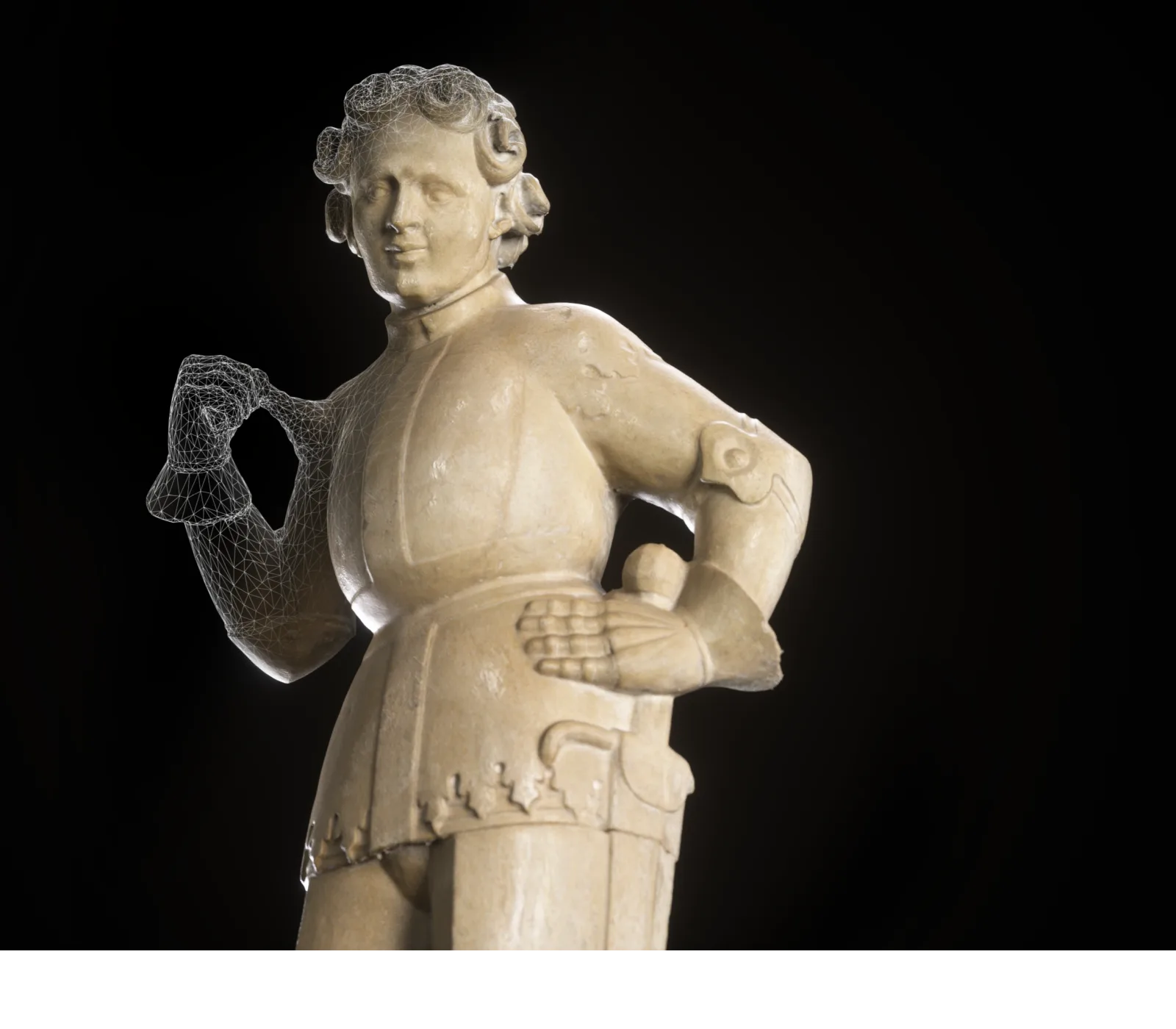
3D render output · AerariumChain production pipeline
AI can only scale when data, permissions and compute can be trusted.
Modern AI and digital-twin workloads create three interdependent problems. Existing products solve them separately, and never all together.
Context
What is this AI allowed to know?
Organisational knowledge is not flat. What an assistant may see depends on person, role, project, asset and partner, and flat chats or shared drives cannot express those boundaries.
Execution
Where should this workload run?
LLM inference, agents, 3D reconstruction, rendering and digital twin pipelines must weigh compute availability, GPU compatibility, VRAM, network, cost, execution time, data location and policy.
Trust
Can we trust the execution and output?
Declared capacity must really exist, residency rules must hold, failures need recovery paths, and every output needs validation and a decision trail.
One layer between your assets and every execution target.
Built as one system, not assembled after the fact. The value is in the interaction of the layers.
From edge to DePIN computing.
One execution continuum governed by smart routing: from SaaS, to compute on nodes running on your own hardware, out to distributed DePIN hardware, all under the same policies.
Four deep-tech pillars.
Smart compute routing
Predicts cost and time stage by stage, verifies that declared capacity is really usable, recovers from provider failures and validates every output.
Distributed AI agents and nodes
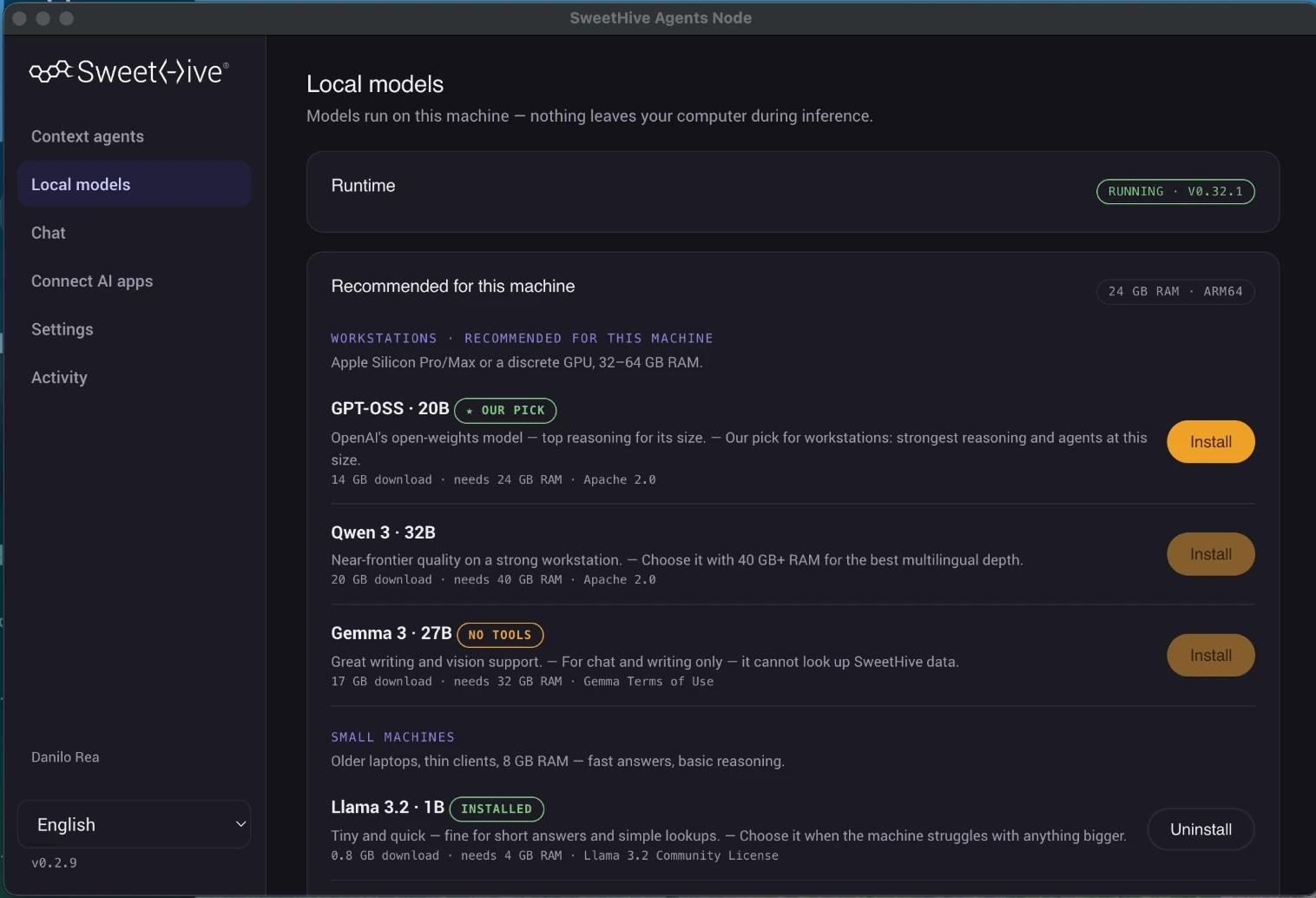
Private agents that know only what your teams allow. With Agents Node, inference runs on your own machine: prompts and data never leave.
Heavy computational processing
Distributed production pipelines for heavy datasets that demand GPU and computing power, from AI workloads to the 3D processing of irreplaceable cultural assets.
Remote visualization
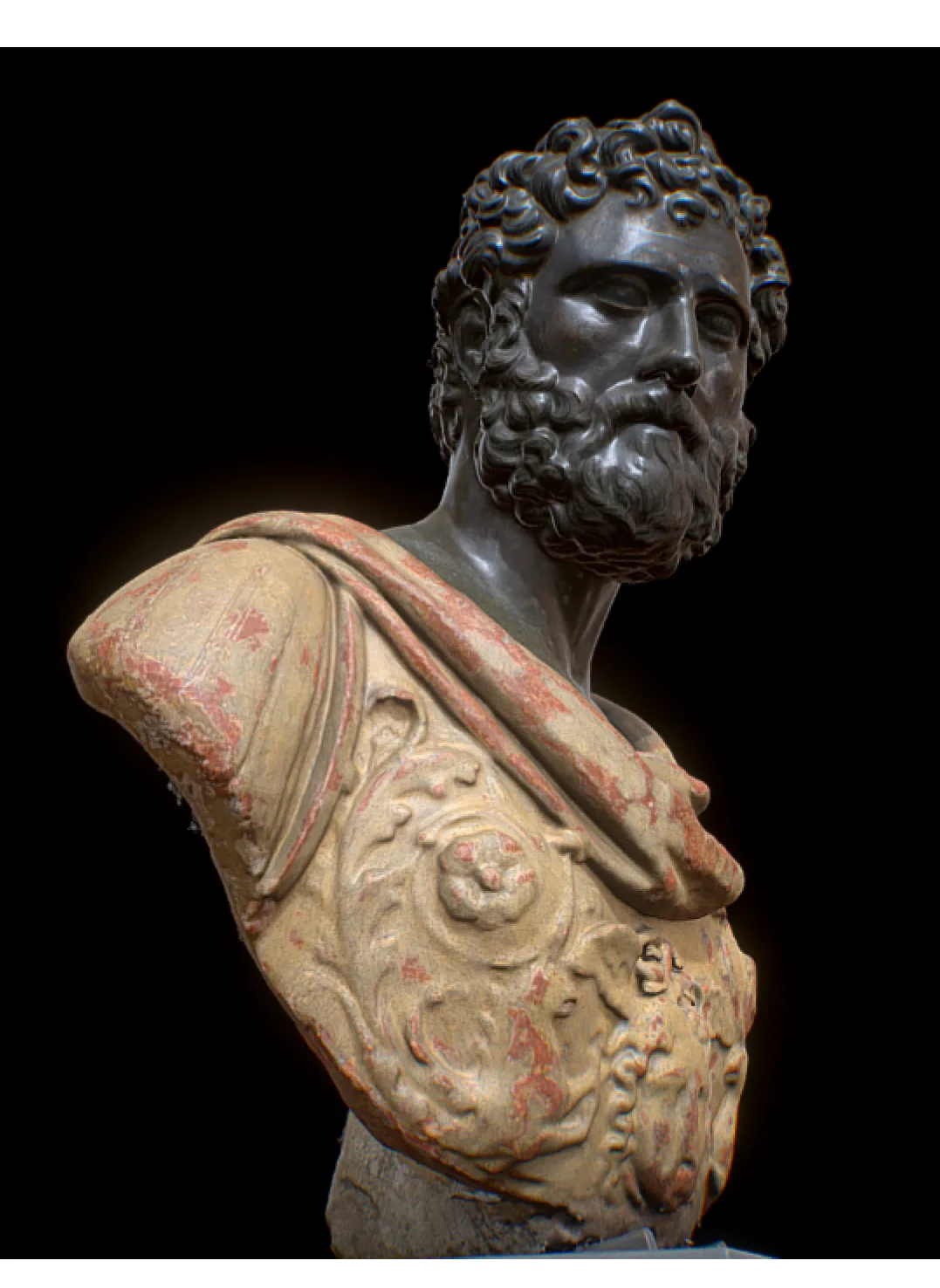
Distributed solutions to stream heavy digital twins to thin clients and mobile, without the underlying data ever being distributed to user devices.
Proven where data are hardest.
We did not validate TrustTwin OS in a lab. We validated it in Europe's museums: heavy 3D data, irreplaceable objects, strict rules on where data can go.
An environment where failure is expensive and data cannot simply be moved or recreated. The same infrastructure pattern repeats far beyond heritage.
Different assets. Same trust problem.
Large files, private datasets, partner collaboration, GPU bursts, controlled hosting, audit obligations: the buying pattern repeats across industries.




Control is part of the architecture.
Data residency is enforced, not promised. Configure local, private, EU-only or country-specific processing, with EU-only profiles that exclude non-European providers entirely.
Where data lives.
Where workloads execute.
Where inference happens.
If a residency rule cannot be guaranteed, the workload does not run.
Particularly valuable for European deployments. The underlying control model is relevant globally.
One architecture. From private AI to the heaviest digital twins.
See how TrustTwin OS can govern your data, agents and compute across local, private and distributed infrastructure.